

“The philosophy of the school room in one generation will be the philosophy of government in the next.” Abraham Lincoln
Tag: small government

Public Apathy Enables Rise of Statism Said President Ronald Reagan!
At Reunion Arena in Dallas, 1984, President Ronald Reagan stated: “Without God there is no virtue because there is no prompting of the conscience. … Without God there is a coarsening of the society; without God democracy will not and cannot long endure. … America needs God more than God needs America. If we ever forget that we are One Nation Under God, then we will be a Nation gone under.”

In 1961, Ronald Reagan stated: “One of the traditional methods of imposing statism or socialism on a people has been by way of medicine. It’s very easy to disguise a medical program as a humanitarian project. … James Madison in 1788 … said … ‘There are more instances of the abridgment of the freedom of the people by gradual and silent encroachment of those in power, than by violent and sudden usurpations.’ … What can we do about this? … We can write to our congressmen and our senators. … Say right now that we want no further encroachment on these individual liberties and freedoms. … We do not want socialized medicine. … If you don’t, this program I promise you will pass … and behind it will come other federal programs that will invade every area of freedom as we have known … until, one day … we will awake to find that we have socialism. And … you and I are going to spend our sunset years telling our children and our children’s children, what it once was like in America when men were free.”
Excerpts courtesy of Bill Federer
Share this:

“Those who expect to reap the blessings of freedom must, like men, undergo the fatigue of supporting it.” Thomas Paine
Share this:
All Freedom Comes From God; Governments Take It Away!
All freedom comes from God. The truest most perfect freedom existed only in the Garden of Eden. Ever since, the pride of mankind has caused power and authority to concentrate with time, resulting in the progressive loss of freedom. The nearly inescapable end result is tyranny. The loss of freedom has been experienced in all cultures and political systems throughout recorded history. When freedom exists to any extent, it will be lost unless it is fervently and aggressively protected, by the people (YOU). Consider the flow:
“…where the Spirit of the Lord is, there is liberty” 2 Corinthians 3:17 KJV
“Stand fast therefore in the liberty wherewith Christ hath made us free, and be not entangled again with the yoke of bondage.” Galatians 5:1 KJV
All civilizations begin in a condition of chaos and anarchy with no external control by government or any other authority. Consider what might happen if you went down in a commercial airliner crash and became part of 100 survivors stranded on a remote uncharted island with no means of communication and little chance of rescue.
You and the other survivors initially work together for survival determining how to meet the immediate needs for food and shelter. Soon, however, disagreements break out, tending to escalate with time. At some point, a council of volunteers or elected members forms to draft guidelines for assuring more harmonious living among the survivors.
The guidelines prohibit certain actions and mandate others. But the voluntary guidelines are only partially effective and conflict continues. A mechanism is designed and designated people are given the authority to monitor compliance with the guidelines, seek violators, and punish them in a predetermined fashion. The guidelines have now become the beginnings of enforceable law.
Whoa! What just happened? All freedom…that’s right, all freedom comes from God as the incredible gift of free will, bounded only by certain moral limitations that He applies for harmonious living and to protect you and others from physical, emotional, and spiritual harm. Those limitations are an expression of His infinite and enduring love. Any form of government can only can only limit or deny any particular freedoms. Governments can only wield money and power in an impersonal way; they have no moral authority or ability.
Government continues to be “of the people, by the people, and for the people” as long as the laws passed and regulations adopted conform to or are aligned with Scriptural mandates as indicated by the region in the Figure labeled “Representative Government.” Such laws and regulations protect freedom.

God-given freedom powered by His love and limited by Scriptural boundaries—primarily the prohibitions of the Ten Commandments and moral/ethical limitations on behavior—depend on voluntary restraint. The prohibitions and limitations were given for the benefit of mankind to assure the richness of the human experience.
“From the day of the Declaration…they [the American people] were bound by the laws of God, which they all, and by the laws of the gospel, which they nearly all, acknowledged as the rules of their conduct” John Quincy Adams
“Though, when a people shall have become incapable of governing themselves and fit for a master, it is of little consequence from what quarter he comes.” George Washington
When laws are passed and regulations adopted extend beyond the region designed to protect freedom, then freedom is progressively lost. There is no reliable barrier along the road to tyranny. What do you think?
Share this:

“God grants liberty only to those who love it, and are always ready to guard and defend it.”
Daniel Webster
Share this:
“Hold on to the Constitution, for if the American Constitution should fail, there will be anarchy throughout the world.” Daniel Webster
Share this:
Big Government is NOT Sustainable
Of course much of small government discussion in a recent blog is viewed as irrelevant by people who are skeptical of the Bible and whose life is largely driven by the theory of evolution. Since people are assumed to be merely the highest evolved animal, it appears reasonable for the best and brightest to be given whatever authority is necessary to make decisions for the masses and whatever resources are necessary to execute their authority. Hence, the virtually uncontrolled expansion of big government:
- There is never enough power or money to satisfy the ego and pride of people in control.
- In the absence of spiritual and emotional influences, decisions tend to be made on a cold practical utilitarian basis, unshackled by the notions of purpose or principle.
- Individual freedom is progressively lost as government demands more and more power.

The power continues to concentrate and government grows until it becomes unsustainable Totalitarian power becomes the inevitable endpoint. The relentless drive to achieve uniformity and “fairness” stifles individual creativity. A major problem is that fairness like beauty is in the eyes of the beholder. There is simply no universally agreed upon definition or standard of fairness. Nevertheless, the notion of fairness continues to resonate well with many voters. In contrast, the Scriptural standard is an integration of judgment and mercy. When the two concepts are in opposition, mercy wins. “…mercy rejoiceth against judgment.” [James 2:13 KJV]
Big Government is evoked by evolution.
- People are controlled by government; power is dispensed by government as “rights” or “benefits.”
- The supporting propaganda is generally unrestricted, because many of the promoters have bought into postmodern thinking, which maintains that there is no absolute truth.
- Big government advocates tend to promote their views with emotion, because the facts of history lead to the inescapable conclusion that small government is better, and because the emotion obscures the cancerous growth of government and feeds the notion that people can get an endless list of freebies from the government.
When YOU compare small government and big government what conclusions to you draw?
Share this:

”Government is not reason; it is not eloquence; it is force! Like fire, it is a dangerous servant and a fearful master.” George Washington
Share this:
Small Gov’t/Big Gov’t Part 2: Small Government is Sustainable
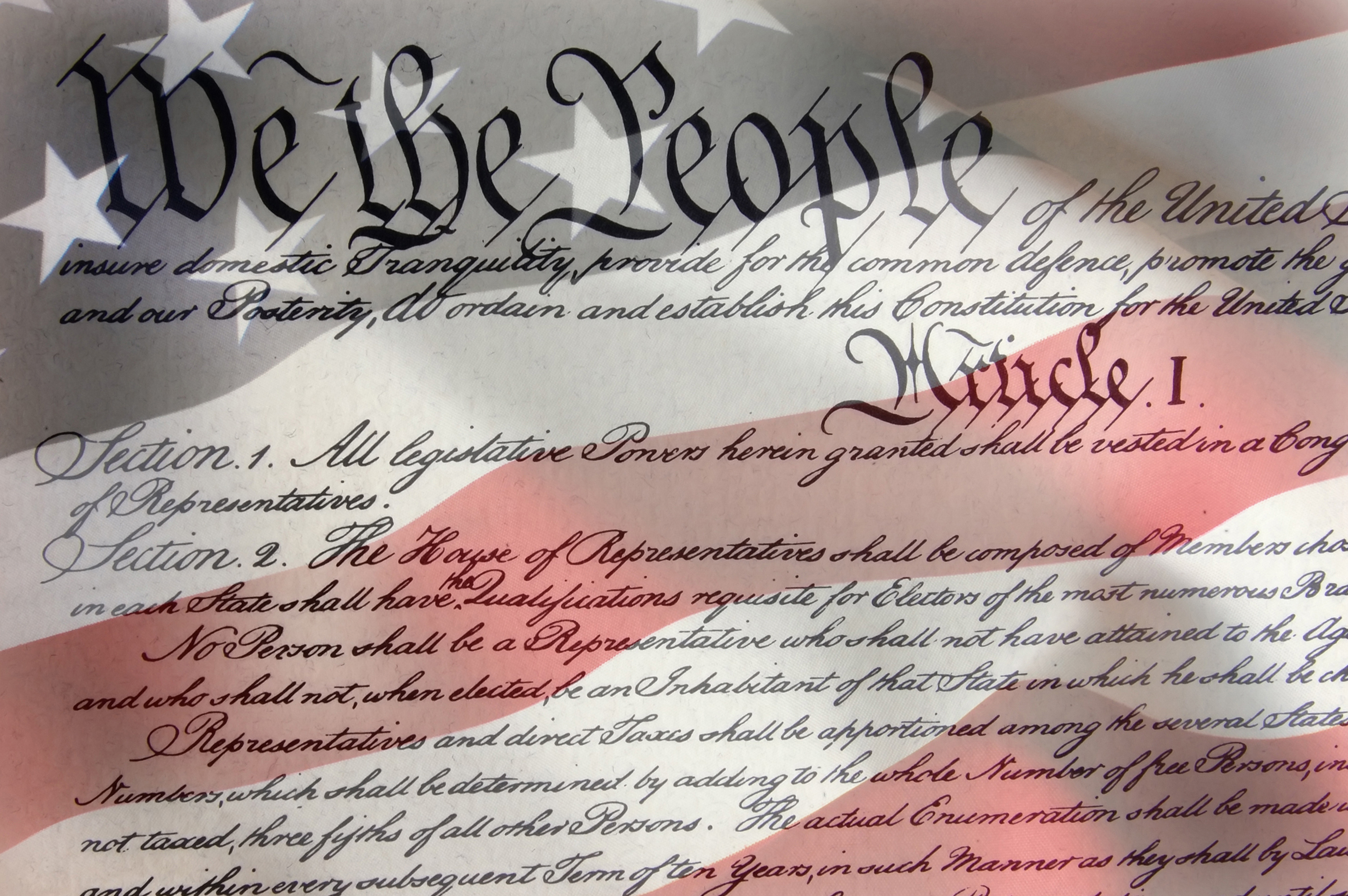
Two common discussions prior to the Revolutionary War were:
- When, if ever, is independence permissible despite scriptural admonitions to obey those in governmental authority? [Romans 13:1] The Founders responded in the Declaration of Independence.
- Are the American people sufficiently virtuous to be self governing? The Founders responded in the Constitution of the United States. “Those people who are not ruled by God will be governed by tyrants.” William Penn
The Founders collective response to the two most important and inescapable questions of the day is why the Declaration of Independence and the Constitution of the United States must be read and understood together as if written as a single document.
The Founders knew that the emerging U. S. Constitution would have to prevent or strongly inhibit the relentless concentration of power that almost universally characterized world history. But they had very little precedent to rely upon. The very few precedents available to the Founders included ancient Israel and early Anglo-Saxon common law. The principle characteristics were nearly identical:
- They were set up as a commonwealth of freemen. A basic tenet was: “Proclaim liberty throughout all the land unto all the inhabitants thereof.” (Leviticus 25:10) This inscription appears on the American Liberty Bell…
- All the people were organized into small manageable units where the representation of each family had a voice and a vote. This organizing process was launched after Jethro, the father-in-law of Moses, saw him trying to govern the people under Ruler’s Law (Exodus 18:13-26)…
- There was specific emphasis on strong, local self-government. Problems were solved to the greatest possible extent on the level where they originated. The record says: “The hard causes they brought unto Moses, but every small matter they judged themselves.” (Exodus 18:26)
- The entire code of justice was based primarily on reparation to the victim rather than fines and punishment by the commonwealth… (Exodus, Chapters 21 and 22). The one crime for which no “satisfaction” could be given was first-degree murder. The penalty was death (Numbers 35:31).
- Leaders were elected and new laws were approved by the common consent of the people. (2 Samuel 2:4; I Chronicles 29:22; for the rejection of a leader; 2 Chronicles 10:16; for the approval of new laws, Exodus 19:8)
- Accused persons were presumed to be innocent until proven guilty. Evidence had to be strong enough to remove any question of doubt as to guilt. Borderline cases were decided in favor of the accused and he was released. It was felt that if he were actually guilty, his punishment could be left to the judgment of God in the future life.13
Rev. Thomas Hooker wrote these principles into the Fundamental Orders of Connecticut, thus expanding upon the concepts of equality and government by the consent of the governed embodied earlier in the Mayflower Compact. That first modern constitution was subsequently adopted by Rhode Island.14 Nearly 150 years later the principles were codified in the Constitution of the United States.
Share this:

Small or Big Government: What Do You Think?

The American public is polarized into essentially two views of government, those who favor small limited government and those who favor big government. Often the polarized view emerges from emotion, a gut sense, or what has been learned or propagandized by the media, politicians, or the educational system, rather than thoughtful investigation and contemplation. The differences are actually quite simple but nevertheless profound and life-changing.
Before comparing small government and big government views, first, consider the Old Testament precedent well known to the American Founders. The Israelites were ruled directly by God for over 400 years from the time of Moses until the time Saul was anointed king by the prophet Samuel. A series of judges resolved disputes among the people. When Samuel grew old, the people demanded a king “…to lead us such as all the other nations have.” [I Samuel 8:5 NIV] During prayer, the “Lord told him (Samuel): ‘Listen to all that the people are saying to you; it is not you they have rejected as their king, but me. As they have done from the day I brought them up out of Egypt until this day, forsaking me and serving other gods, so they are doing to you. Now listen to them; but warn them solemnly and let them know what the king who will reign over them will do.’” [I Samuel 8:7-9 NIV] Samuel told the Israelites:
This is what the king who will reign over you will do: He will take your sons and make them serve with his chariots and horses, and they will run in front of his chariots. Some he will assign to be commanders of thousands and commanders of fifties, and others to plow his ground and reap his harvest, and still others to make weapons of war and equipment for his chariots. He will take your daughters to be perfumers and cooks and bakers. He will take the best of your fields and vineyards and olive groves and give them to his attendants. He will take a tenth of your grain and of your vintage and give it to his officials and attendants. Your menservants and maidservants and the best of your cattle and donkeys he will take for his own use. He will take a tenth of your flocks, and you yourselves will become his slaves. When that day comes, you will cry out for relief from the king you have chosen, and the Lord will not answer you in that day. [I Samuel 8:11-18 NIV]
The people refused to listen to Samuel who again took their demands to the Lord. Then, “The Lord answered, “Listen to them and give them a king.” God had effectively said, “Be careful what you ask for.” What was the result? With the exceptions of several periods of captivity, the Israelites were ruled for the next one thousand years by kings. Following the disobedience of King Solomon, Israel split into two nations, the Kingdom of Israel and the Kingdom of Judah. Readers of the Old Testament commonly and somewhat loosely refer to the “good kings” and the “bad kings” of the period. The good kings, “did what was right in the eyes of the Lord.” The bad kings, “did what was right in their own eyes.” The so-called bad kings dominated the more rebellious Israel. Judah experienced a mix of good kings and bad kings. Clearly, replacing God as the ultimate loving King with a long series of self-serving, self-indulgent men as kings had devastating consequences for the Israelites.
The nature and hearts of people have not changed. From the time of ancient Israel until the present most nations have been headed by kings or king-like dictators. But something changed. In modern times there was a tectonic shift in at least a portion of western civilization. Many groups migrated to the shores of North America seeking to exercise the freedom given by God to worship Him in the manner they chose. They were fleeing king-worship and king subjugation. As the Revolutionary War approached, a common rallying cry, passed up and down the eastern seaboard by the Committees of Correspondence, was, “No King but King Jesus.”1 The colonies and later the United States were blessed by God in extraordinary ways ultimately producing the world’s highest standard-of-living and the best quality-of-life.
Share this:

No Homemaker “Gap” in Resume

Occasionally, women who have stayed at home for a number of years to be a homemaker and mother ask me how to handle the “gap” in their resume. I tell them that there is no gap. They have served as the:
Chief Operations Officer (COO) of the home, responsible for:
- operations and maintenance of the home,
- capital improvements (remodeling),
- purchasing, budgeting, financial management, and marketing (representing the family’s interests and reputation inside and outside the home),
- managing subcontractors (plumbers, electricians, appliance repairs, yard workers, etc.),
- field operations (activities related to hobbies, sports, and places of worship),
- human resource management (inspiring and motivating family members to be productive and actively responsible),
- personnel training (raising the children with a strong sense of values), and
- environmental management (greening the home & family worldview).
Building a safe, stress free family organizational culture. Making the home the most desirable place in the universe for the family and raising offspring to become adults of strong character is a boundaryless (24/7) full time responsibility. Serving as a homemaker is much like running a small business. The multidisciplinary wisdom and management experience acquired is applicable to virtually any workplace.
If you agree with the above characterization of a homemaker, you may feel free to use it without attribution. What do you think?

 Dr. Lloyd Stebbins