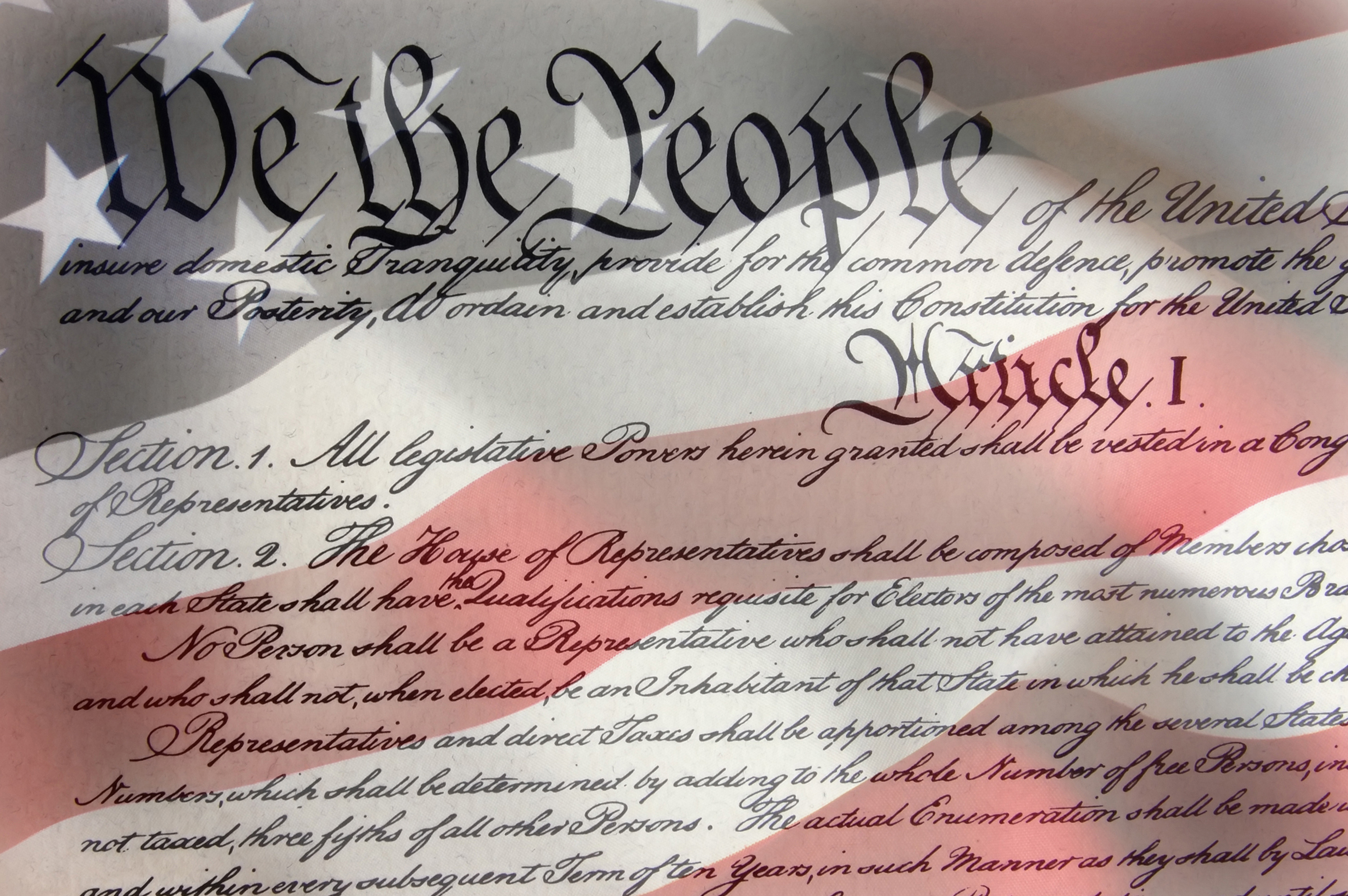
American Exceptionalism Exists! You May Not Know Why.

References to American exceptionalism have recurred with increasing frequency in recent years. Some champion the notion; Russian President Vladimir Putin has recently scoffed at it on several occasions, regarding it as a representation of American arrogance. American exceptionalism arose because a critical mass of Americans looked to God as the source of everything for the first 150 years of United States history.

African woman and business team.

Because Americans looked to God and loved God they enjoyed His abundant blessings. Americans were blessed with the ability to generate the world’s highest standard-of-living and best quality-of-life. America became the standard of freedom and the envy of people around the globe. People everywhere wanted to become Americans, be like Americans, or copy American styles and fads. America was a leader and a positive role model for the world. Spectacular military successes in two world wars and incomparable economic successes simply reinforced the image of American exceptionalism.

But in recent decades as Americans have increasingly abandoned God His hand of blessing has receded. America’s worldwide reputation for outstanding leadership has been shattered. Leaderless America wanders in a spiritual wilderness, shamelessly and repeatedly elects a government that squanders vast financial and material resources, and has become a worldwide negative role model that regretfully attracts as much attention as did the previous reputation for being a positive role model. People throughout the world still follow America’s downward spiral with as much gusto as they followed America’s upward climb to greatness. America’s influence extends far beyond its shores whether for good or evil.

But without God, Americans are no better than anyone else. American exceptionalism arose not because Americans are exceptional but because God is exceptional. He still is. Does American exceptionalism still exist? You decide. If you lean toward, “no,” know that God is still exceptional. American exceptionalism can again become abundantly visible to the world only to the extent that Americans become once again willing to trust God and to love God. Are YOU willing to become part of it? Individuals of Judeo-Christian tradition and faith-based institutions can no longer be content to rearrange the deck chairs on the rapidly sinking American Titanic.

Homemaker Enjoys The Most Important Career in the Universe!

A Homemaker enjoys the most influential and vital career in the universe. She is responsible for the stability of a culture and the cohesiveness of the family. She is the panoramic link in time, connecting the generations. She links the past to the future, ancestors to descendants. She is primarily responsible for raising the children in a manner that stabilizes their future and transmits critically important values to the next generation. In short, she makes the home the most desirable place in the universe for her family.

When the homemaker leaves the home, love leaves like air out of a flat tire. The home becomes the house, little more than the building where everyone comes to sleep at night.

ba3db6c0-032d-47ce-ad20-97352cf6f45d

Consider the fruit of a family-centered family as opposed to a career-centered family:

  • Builds strong cohesive families when Dad is responsible for standard-of-living and Mom is responsible for quality-of-life
  • Promotes a partnership between married men and women that grows closer with time
  • Children reared by those who love them most…Mom and Dad
  • Low risk monogamous sex provides for pleasure and reproduction
  • Number and frequency of venereal diseases sharply reduced and largely eliminated
  • Few abortions, because the unborn child is an expression of the parents’ love
  • One man; one woman; one lifetime is the stable marriage norm accepted for six millennia
  • Men and women both desire the stability of marriage
  • Stable relationships between a man and a woman due to the certainty of the marriage commitment
  • Infrequent divorce due to love and respect for spouse as well as responsibility for children
  • Legacy of cultural stability passed on to successive generations
  • Children experience and enjoy the complementary influences of a mom and a dad
  • “Alternative lifestyles” viewed as against nature, culturally destructive, and inappropriate especially when children are involved
  • Children are more stable, less stressed, more secure, and behavior is more predictable and…when necessary…more controllable
  • Husband and father is vital to the well-being of the family
  • Preserves and reinforces the sanctity of life and sanctity of marriage
  • Protects and reinforces the sovereignty of the family
  • Lifestyle evokes a happier and healthier woman and strong family relationships

What do you think? Have we lost something vitally important in our modern American culture?

American Founders Endowed with Uncommon Wisdom!

John Adams

In recent years, it seems to have become open season on the American Founders. Some have scornfully described the Founders as dead white guys who owned slaves. Well—they’re certainly dead; they were white; and only a few owned slaves and the ones that did, didn’t like the institution. Such will be a topic of another blog. The Founders were actually endowed with uncommon wisdom. To understand them, it is far better to read what they actually said, rather than what some historian may have concluded about them. My upcoming book allows the Founders to speak for themselves. For now, let’s consider the words of just one of them, John Adams. He was a Founder, signer of the Declaration of the United States, Vice President under George Washington, and the second President of the United States.

  • June 21, 1776Statesmen, my dear Sir, may plan and speculate for liberty, but it is Religion and Morality alone, which can establish the Principles upon which Freedom can securely stand.” “The only foundation of a free Constitution is pure Virtue, and if this cannot be inspired into our People in a greater Measure, than they have it now, they may change their Rulers and the forms of Government, but they will not obtain a lasting liberty.”
  • July 1, 1776Before God, I believe the hour has come. My judgment approves this measure, and my whole heart is in it (Declaration of Independence). All that I have, and all that I am, and all that I hope in this life, I am now ready here to stake upon it. And I leave off as I began, that live or die, survive or perish, I am for the Declaration. It is my living sentiment, and by the blessing of God it shall be my dying sentiment. Independence now, and Independence forever!
  • In a July 1, 1776 letter to Archibald Bullock, former member of the Continental Congress from Georgia, Adams wrote:The object is great which We have in View, and We must expect a great expense of blood to obtain it. But We should always remember that a free Constitution of civil Government cannot be purchased at too dear a rate as there is nothing, on this side (of) the New Jerusalem, of equal importance to Mankind.”
  • July 3, 1776The second day of July, 1776, will be the most memorable epoch in the history of America. I am apt to believe that it will be celebrated by succeeding generations as the great anniversary Festival. It ought to be commemorated, as the Day of Deliverance, by solemn acts of devotion to God Almighty. It ought to be solemnized with pomp and parade, with shows, games, sports, guns, bells, bonfires and illuminations, from one end of this continent to the other, from this time forward forever. “You will think me transported with enthusiasm, but I am not. I am well aware of the toil and blood and treasure that it will cost to maintain this Declaration, and support and defend these States. Yet through all the gloom I can see the rays of ravishing light and glory I can see that the end is worth more than all the means; that posterity will triumph in that day’s transaction, even though we [may regret] it, which I trust in God we shall not.”
  • In concern for his sons, John Adams advised his wife Abigail to: “Let them revere nothing but Religion, Morality and Liberty.”
  • 11, 1798 (Address to the military)We have no government armed with power capable of contending with human passions unbridled by morality and religion. Avarice, ambition, revenge, or gallantry, would break the strongest cords of our Constitution as a whale goes through a net. Our Constitution was made only for a moral and religious people. It is wholly inadequate to the government of any other.”
  • On November 2, 1800, John Adams became the first president to move into the White House. As he was writing a letter to his wife, he composed a beautiful prayer, which was later engraved upon the mantel in the state dining room:I pray Heaven to bestow THE BEST OF BLESSINGS ON THIS HOUSE and All that shall hereafter Inhabit it, May none but Honest and Wise Men ever rule under This Roof.”
  • August 28, 1811Religion and virtue are the only foundations, not only of all free government, but of social felicity under all governments and in all the combinations of human society.”
  • June 28, 1813Now I will avow, that I then believe, and now believe, that those general Principles of Christianity, are as eternal and immutable, as the Existence and Attributes of God; and that those Principles of liberty, are as unalterable as human Nature and our terrestrial, mundane System.”
  • In a letter to Thomas Jefferson, John Adams wrote:Have you ever found in history, one single example of a Nation thoroughly corrupted that was afterwards restored to virtue?… And without virtue, there can be no political liberty….Will you tell me how to prevent riches from becoming the effects of temperance and industry? Will you tell me how to prevent luxury from producing effeminacy, intoxication, extravagance, vice and folly?…I believe no effort in favor is lost…
  • In a letter dated November 4, 1816, John Adams wrote to Thomas Jefferson:The Ten Commandments and the Sermon on the Mount contain my religion…
  • December 27, 1816As I understand the Christian religion, it was, and is, a revelation.” “Liberty cannot be preserved without a general knowledge among the people, who have…a right, an indisputable, unalienable, indefeasible, divine right to that most dreaded and envied kind of knowledge, I mean the character and conduct of their rulers.”

Do you agree that at least this Founder was endowed with uncommon wisdom?

Small Gov’t/Big Gov’t Part 2: Small Government is Sustainable

flag

Two common discussions prior to the Revolutionary War were:

  • When, if ever, is independence permissible despite scriptural admonitions to obey those in governmental authority? [Romans 13:1] The Founders responded in the Declaration of Independence.
  • Are the American people sufficiently virtuous to be self governing? The Founders responded in the Constitution of the United States. “Those people who are not ruled by God will be governed by tyrants.” William Penn

The Founders collective response to the two most important and inescapable questions of the day is why the Declaration of Independence and the Constitution of the United States must be read and understood together as if written as a single document.

The Founders knew that the emerging U. S. Constitution would have to prevent or strongly inhibit the relentless concentration of power that almost universally characterized world history. But they had very little precedent to rely upon. The very few precedents available to the Founders included ancient Israel and early Anglo-Saxon common law. The principle characteristics were nearly identical:

  1. They were set up as a commonwealth of freemen. A basic tenet was: “Proclaim liberty throughout all the land unto all the inhabitants thereof.” (Leviticus 25:10) This inscription appears on the American Liberty Bell…
  2. All the people were organized into small manageable units where the representation of each family had a voice and a vote. This organizing process was launched after Jethro, the father-in-law of Moses, saw him trying to govern the people under Ruler’s Law (Exodus 18:13-26)…
  3. There was specific emphasis on strong, local self-government. Problems were solved to the greatest possible extent on the level where they originated. The record says: “The hard causes they brought unto Moses, but every small matter they judged themselves.” (Exodus 18:26)
  4. The entire code of justice was based primarily on reparation to the victim rather than fines and punishment by the commonwealth… (Exodus, Chapters 21 and 22). The one crime for which no “satisfaction” could be given was first-degree murder. The penalty was death (Numbers 35:31).
  5. Leaders were elected and new laws were approved by the common consent of the people. (2 Samuel 2:4; I Chronicles 29:22; for the rejection of a leader; 2 Chronicles 10:16; for the approval of new laws, Exodus 19:8)
  6. Accused persons were presumed to be innocent until proven guilty. Evidence had to be strong enough to remove any question of doubt as to guilt. Borderline cases were decided in favor of the accused and he was released. It was felt that if he were actually guilty, his punishment could be left to the judgment of God in the future life.13

Rev. Thomas Hooker wrote these principles into the Fundamental Orders of Connecticut, thus expanding upon the concepts of equality and government by the consent of the governed embodied earlier in the Mayflower Compact. That first modern constitution was subsequently adopted by Rhode Island.14 Nearly 150 years later the principles were codified in the Constitution of the United States.

Can an Unbeliever Make a Credible Movie About a Biblical Event?

Ten Commandments

The short answer? No! Throughout the 1950s, there were a number of highly successful Biblical epics made by Hollywood. The most spectacular was Cecil B. DeMille’s, The Ten Commandments. After a very long hiatus, the spectacular success of The Passion of the Christ renewed Hollywood’s interest in Bible-based movies. Recently, a movie called Noah was released and another, Exodus: Gods and Kings is nearing release. Both were made by directors who claim to be atheist or agnostic. Let’s Compare.

At the beginning of the movie, The Ten Commandments, director Cecil B. DeMille did something remarkable. He walked out on a stage to preface the movie with a few heartfelt comments:

Ladies and Gentlemen; young and old; this may seem an unusual procedure, speaking to you before the picture begins, but we have an unusual subject: the story of the birth of freedom; the story of Moses. As many of you know the Holy Bible omits some thirty years of Moses’ life, from the time that he was a three- month old baby and was found in the bull rushes by Bithiah the daughter of Pharaoh and adopted into the court of Egypt until he learned that he was Hebrew and killed the Egyptian. To fill in those missing years, we turn to ancient historians such as Philo and Josephus. Philo wrote at the time that Jesus of Nazareth walked the earth; Josephus wrote some fifty years later and watched the destruction of Jerusalem by the Romans. These historians had access to documents long since destroyed or perhaps lost like the Dead Sea Scrolls. The theme of this picture is whether men ought to be ruled by God’s laws or whether they are to be ruled by the whims of a dictator like Rameses. Are men the property of the State or are they free souls under God? This same battle continues throughout the world today. Our intention was not to create a story, but to be worthy of the divinely inspired story created 3,000 years ago in the five books of Moses.

DeMille’s understanding of the importance of God’s laws was further clarified in the souvenir book distributed along with the movie:

The Ten Commandments are not rules to obey as a personal favor to God. They are fundamental principles without which mankind cannot live together—THE TEN COMMANDMENTS are not laws. They are THE LAW. Man has made 32,000,000 laws since they were handed down to Moses on Mount Sinai more than three thousand years ago, but he has never improved on God’s law.

The movie was clearly DeMille’s labor of love.

In contrast, a movie entitled Noah, about the Biblical worldwide flood was recently released. The director, Darren Aronofsky, is a self-proclaimed atheist. He departed widely from the Biblical account portraying Noah as the first great environmentalist and not mentioning God at all despite over ten references to God in the original. Another movie, Exodus: Gods and Kings is nearing release. The director Ridley Scott, is a self-acknowledged agnostic. Christian Bale the leading man has on separate occasions referred to Moses as schizophrenic and a terrorist. Scott’s rendering has God speaking to Moses through an angry child, rather than the burning bush and at least a few supernatural events, such as the Nile River turning to blood, are explained in natural terms. In the case of the Nile, a non-Biblical plague of crocodiles feeds on people whose blood turns the river red.

Can an evolution-driven humanistic director possibly make a God-honoring movie when he disavows the existence of God? The Ten Commandments was made to glorify God; the modern depictions of Noah and Exodus: Gods and Kings were made to glorify Hollywood and the creativity of man. Cecil B. DeMille felt morally and spiritual bound to present Biblical history as accurately and respectfully as possible. Aronofsky and Scott claim no such allegiance. To them, the Biblical “stories” are merely a starting point. They feel free to depart from Scripture as often and as widely as they choose to achieve their goal of an agenda-filled entertaining movie. The state-of-the-art is such that the modern movies can be wildly entertaining but at what price?

Flashback! For decades preceding World War II, Hollywood elites were fascinated supporters of Joseph Stalin and communism in general. The pre-war communist influence in Hollywood has been well documented. At that time, American Communist Party leader Earl Browder discouraged the making of propaganda films. Instead, he encouraged movie makers to slip in “a drop of progressive thought” in regular movies, about five minutes in each movie. In the decades since WWII, Hollywood continued and still does have a love affair with socialism, which is communism-lite. The agendas in Noah and Exodus: Gods and Kings are clear. Despite the entertaining nature of the movies, the makers want to discredit Judo-Christian tradition by displacing it with humanist values and goals.

In 1956, Cecil B. DeMille billed his movie, The Ten Commandments, as the story of “the birth of freedom.” It was the story of the Moses-led exodus of the ancient Israelites, following 400 years of slavery in Egypt. Many centuries after the Hebrews were freed from Egyptian bondage, that God-given freedom was codified successively in the Magna Carta (1215), the Mayflower Compact (1620), the Fundamental Orders of Connecticut (1639) and the Constitution of the United States (1787).

It is difficult to avoid billboards. But YOU get to choose movie, television, and Internet experiences. All are powerful art forms, powerful because they reach the depths of the soul branding an imprint in a powerful and lasting way. No art form is neutral; it will either lift the soul toward God or drag the soul down. There is no movie, television show, or Internet experience that is just entertainment and nothing else. Even if the art form does not have an explicit agenda, it absolutely does reflect the worldview of its creator. As they say in the radio editorials, “That’s our view; we welcome yours.”

The Thanksgiving Miracle of Five Kernels of Corn

Bible and Holiday Dinner

Most of us learned about Thanksgiving in school. You know the drill. In 1620, the Pilgrims crossed the ocean blue and experienced a devastatingly harsh winter along the Massachusetts coast. About half of them perished. Spring finally arrived and a friendly Indian named Squanto helped the Pilgrims learn how to obtain food by stomping eels out of the mud and fertilizing corn with dead fish. The following fall, they celebrated an abundant harvest with a feast that became known as the first Thanksgiving. But there is more, much more. The string of miracles is nearly endless:

  • Many years before, the Separatists, later known as the Pilgrims, reached the breaking point of frustration and disappointment after enduring severe persecution by the Church of England. They “removed” to Leyden, Holland. After nearly a dozen years of severe adversity and personal toughening, it was time to leave. They came to believe the America was their “promised land.” They found their way back to England on the ship, Speedwell, prepared to join the Mayflower for the long difficult voyage to America. At Southhampton, their sponsors forcibly required them to accommodate 80 “strangers” who would later strain the best of interpersonal relationships. The Pilgrims numbers were reduced due to limited capacity on the ships. In July, 1620, they sailed west. In barely three days they had to return to England, because of structural problems with the masts on the Speedwell. Again, their numbers were reduced to stay within the carrying capacity of the Mayflower. God had sifted their numbers repeatedly. Only the hardiest of the hardy remained on the Mayflower for the epic journey.
  • Crossing the Atlantic Ocean, the Pilgrims endured “seven weeks of the hell of an ill-lighted, rolling, pitching, stinking inferno” as well as tormenting by the crew. All manner of sins were brought to the surface, confessed, and forgiven. By the time they reached land, they were a spiritually cleansed and extremely close-knit group. Adversity does that.
  • Mid-way across the Atlantic, they experienced a life-threatening emergency. The immense cross-beam supporting the main mast was failing. They would likely be lost at sea. After intense prayer, William Brewster had a eureka moment. He recommended using the giant iron printing press screw to support the breaking beam. It worked! Even the skeptical sailors praised God along with the Pilgrims.
  • Just before landing at Plymouth in Massachusetts, they realized they were under no legal jurisdiction. To maintain order, they wrote and everyone signed the Mayflower Compact. The miracle and genius of the document is that it included many of the same principles later embodied in our founding documents.
  • Their landing site was protected by Cape Cod. The site was flat, cleared, and had four freshwater streams and even a cache of corn. How could that happen? The area was previously cleared and inhabited by the Patuxet Indians, one of the few tribes known to be extremely hostile. Years before the Pilgrims’ arrival, the tribe was wiped out by a plague. Other tribes avoided the area, fearing presence of evil spirits. It was a miracle site for the Pilgrims.
  • They finally set foot on land in mid-November, 1620.The first winter was extremely harsh and food was scarce. In January, the thatched roof of the Common House caught fire, a life-threatening emergency, due to their utter dependence on that building. Adversity inspired even more prayer and bound them together even tighter. By Spring, they had lost about half their number. Still the mortality rate was not nearly as high as in Jamestown, Virginia. The miracle was that half did survive.
  • In their most desperate hour into their camp walked a Christian, English-speaking Indian, a Patuxet no less. Yes, you read it right. He was the Squanto of our school days lessons. He was the only survivor of the plague that killed the rest of his tribe, because he was not there. In 1605, Squanto was one of four Indians taken captive and shipped to England, where they were taught English so they could be questioned. Squanto spent nine years in England. In 1614, he was returned to America by Captain John Smith (Yes, it is the same one you remember from the Pocohontas story hundreds of miles to the South.). But Squanto was quickly captured again, taken to Spain and sold as a slave. He was bought and feed by local friars who taught him the Christian faith. Upon his second return to America, Squanto was devastated to find that his entire tribe had succumbed to a plague. Alone and wandering through the woods, Squanto was discovered by Massasoit, chief of the Wampanoags. The wise chief recognized that the Pilgrims had a desperate need and the Squanto desperately needed to be needed. Massasoit sent Squanto, the Christian, English-speaking Indian to the Pilgrims. William Brewster would later call Squanto, “a special instrument sent of God for their good, beyond their expectation.” Squanto effectively became an earthly savior. He taught the Pilgrims how to survive in a harsh, rugged, untamed wilderness.
  • Following a bountiful harvest, they and about ninety Indians celebrated the feast that became known as the First Thanksgiving. The three-day celebration and the new arrivals from England consumed much of the provisions for the second winter.
  • By Spring, the food ration for each individual was down to an unimaginable five kernels of corn per day. Nevertheless, they survived again and enjoyed a bountiful harvest after the second summer.
  • When everyone approached the table for the Second Thanksgiving feast, they found a plate with just five kernels of corn as a reminder of God’s limitless grace even under the harshest of conditions.

Here is a challenge for you. Set this year’s Thanksgiving table with just five kernels of corn on each plate. Before enjoying the rest of the feast, share this story with your family and guests. God’s grace is truly wonderful! Tell everyone, about it, beginning with your family.

Much of this story was abstracted from The Light and the Glory, by Peter Marshall and David Manuel (1977), Fleming H. Revell Company; Old Tappan, New Jersey.

Have You Ever Received a Love Letter from God?

Roses bouquet and greeting card

God’s love letter—the Bible—contains everything necessary to assure the richest possible human experience. However, simple intellectual knowledge of the Bible is seldom sufficient to change a life to the extent necessary to experience the full richness of life that God intended. A life-changing experience tends to arise when intellectual knowledge expands to include emotional and spiritual knowledge deeply embedded within the soul. The movement of the wholeness of knowledge from the head to the soul arises from growing interpersonal relationships and frequent, active, and conscious choices to serve the needs of others, sacrificing the desires of self along the way. Knowledge embedded in the soul creates the drive to do right and grow in godly character. Soulful knowledge evokes motivation; head knowledge is merely stored.

However, godly growth—the movement of the fragmented head knowledge to the wholeness of the soul—is inhibited by intense cultural peer pressure. Like everyone else, Jews and Christians are endlessly bombarded by the lures of materialism, self-indulgence, and boundaryless sex, which virtually always come at the expense of others. The lures are so intense and unrelenting that they facilitate compromises in honesty, integrity, and other important character values. The lack of values has become a new norm in the mainstream culture and a persistent temptation within what remains of the Judeo-Christian culture. So many believers have at least tacitly moved from a sense of temptation to the new norm of lost or compromised values that statistically there is no difference in the tragic rates of divorce and abortion between believers and unbelievers, including atheists and agnostics.

No one wakes up in the morning stretching, rubbing the sleep out of his or her eyes thinking, “What a beautiful day; what a great day to go out and sin!” Compromises to values, patterns of poor behavior, and a drift away from God progressively result from extremely small, barely inappropriate, seemingly inconsequential decisions that accumulate over days, weeks, months, and years. The gradual erosion of values is ultimately passed from generation to generation. The end game is that the American culture and the great American experiment in self-rule are in grave jeopardy, because Judeo-Christian believers have become compromised followers, rather than principled leaders. The cultural pressures are so great that believers are unlikely to mature and grow in character without making regular, conscious, deliberate decisions to serve the needs of others, beginning with the family and working outwards. In an expanded sense, the price of spiritual apathy is extremely high here and may cause many people to miss out on eternity with God later.

The Judeo-Christian culture is a subset of the national culture. From the founding of the United States through the first 150 years, the Christian culture and Judeo-Christian tradition dominated the national culture. Regardless of whether or not specific individuals or groups were “believers,” the culture was driven by the national “soul,” which was steeped in Judeo-Christian tradition. But in recent decades major demographic changes along with the steady erosion of morals and traditional standards of behavior have resulted in a shrinking proportion of loving devout believers in the American culture wielding diminishing influence. The United States simply cannot survive continued massive assaults on Christianity, the family, the Constitution, and the free enterprise economic system. Founder John Adams thoughtfully commented:

We have no government armed with power capable of contending with human passions unbridled by morality and religion. Avarice, ambition, revenge, or gallantry, would break the strongest cords of our Constitution as a whale goes through a net. Our Constitution was made only for a moral and religious people. It is wholly inadequate to the government of any other.

Several years ago a protestant pastor was heard commenting that, “Christians no longer have a culture.” They have been largely assimilated by the secularized national culture. Similarly, in an interview, the Catholic Pope Benedict was asked to identify the greatest challenge facing the church today. His reply was that the greatest challenge facing the church today is the secularization of the church, a response remarkably similar to the pastor’s comment. What do you think?

American Culture in Free Fall

eagle and flag

America, specifically the United States of America has been truly blessed in extraordinary ways throughout most of its history on this continent. However, in the last fifty years there has been a readily observable and measurable decline in the American culture.

The importance of lifelong character development has largely been lost. A true understanding of the intimate and inescapable link between the cohesiveness of the traditional family and the cohesiveness and sustainability of the American culture has faded rapidly. Children have become virtually disposable by abortion, neglect, or surrendering them to strangers to grow up with an endless procession of day care centers, government-sponsored programs and schools, and babysitters while mom and dad devote their best and highest priority time to chasing the elusive “successful career.”

The millennia-long multicultural definition of the family is rapidly being diluted to near oblivion. The decline has reached the point that all major institutions (media, education, politics, and entertainment) are dominated and driven by people with an evolution-driven humanistic often godless mindset. The juggernaut of decline is diving toward chaos or totalitarian government control of every aspect of life. Freedom is becoming little more than a legend related by the oldest seniors to their grandchildren and great grandchildren.

To what do YOU attribute the decline of American culture and the family?