

“Only fools say in their hearts, ‘There is no God.'” [Psalms 14:1 NLT]
Tag: big government

Biblical and Evolutionary Worldviews Cannot Coexist
Evolution, also known as scientific naturalism, is a faith system that underlies secular humanism. According to The Humanist Manifesto 2000, “The unique message of humanism on the current world scene is its commitment to scientific naturalism.” In 1961, the Unites States Supreme Court declared, “Among religions in this country which do not teach what would generally be considered a belief in the existence of God are…Secular Humanism, and others.” MacArthur observes that,
Religion is exactly the right word to describe naturalism. The entire philosophy is built on a faith-based premise. Its basic presupposition—a rejection of everything supernatural—requires a giant leap of faith…The notion that natural evolutionary processes can account for the origin of all living species has never been and never will be established as fact. Nor is it “scientific” in any true sense of the word. Science deals with what can be observed and reproduced by experimentation. The origin of life can neither be observed nor reproduced in any laboratory. By definition, then, true science can give us no knowledge whatsoever about where we came from or how we got here. Belief in evolutionary theory is a matter of sheer faith. And dogmatic belief in any naturalistic theory is not more “scientific” than any other kind of religious faith.
Even Charles Darwin remarked, “I was a young man with unformed ideas…to my astonishment the ideas took like wildfire. People made a religion of them.” A century later, Whittaker Chambers added, “Humanism is not new. It is, in fact, man’s second oldest faith. It’s promise was whispered in the first days of the Creation under the Tree of Knowledge of Good and Evil: “Ye shall be as gods.”
Consider the practical implications of the two opposing worldviews expressed in Figure. The dichotomy of the two worldviews is clear. The evolution dominated worldview isolates the individual as a temporary, purposeless, and insignificant fragment of the universe dedicated to self-centered survival, a self-indulgent life and promotion of self-interests. It is a view that evokes all the characteristics on the left side of the Figure. Civilization eventually dissolves into chaos, which is soon overtaken by totalitarianism, personal freedom is lost and the individual is controlled by others. Ultimately he/she dies—that is the end—there is nothing more.

In contrast, the Judeo-Christian worldview recognizes the uniqueness of a person made in the image of God and assigned the dual purpose of loving Him and loving others. “’Love the Lord your God with all your heart and with all your soul and with all your mind.’[Matthew 22:37; Deuteronomy 6:5 NIV] This is the first and greatest commandment. And the second is like it: ‘Love your neighbor as yourself.’ [Matthew 22:39; Leviticus 19:18 NIV] All the Law and the Prophets hang on these two commandments.” [Matthew 22:40 NIV] The Judeo-Christian worldview considers life as sacred to be honored and protected. The focus is on self-sacrifice, giving, and meeting the needs of others. Culture (civilization) is strengthened and personal freedom is maximized and guaranteed by a limited representational government. Ultimately, his/her eternal life is the supreme joy of being forever in the presence of the Creator.
Which do you prefer? Is it the frantic and frenzied high-stress short-term hedonistic pursuit of pleasure and avoidance of pain ending in annihilation (death)? Or is it the orderly, joyful satisfaction of meeting the needs of others, sharing life in a network of many others holding similar views, relishing the ultimate joy of sharing eternity with God and others in a place called Heaven? The choice should be an easy one, don’t you agree?
There is no evolutionist that perfectly fits the left side of the Figure. Similarly, there is no Christian that perfectly fits the right side. Nevertheless, a person’s wholly or partially adopted worldview will tend to drive him/her either toward the left or the right. Life is not static; the absence of movement is not possible. There will be “growth” in one direction or the other. In recent decades, growing cultural pressure has resulted in a general drift to the left of both the background American culture and also the Judeo-Christian culture, although the believers’ culture tends to be a few steps “behind” the background culture.
Jews and Christians have collectively displayed a growing character weakness primarily because they must live within a culture saturated with the fruit of evolutionary thinking. However, they are only available to a gathering of other believers in the churches and synagogues a few hours each week for what tends to be primarily a one-dimensional, spoon-fed intellectual education, i.e. listening to the teacher/preacher/rabbi in an atmosphere devoid of real personal experience. Believers often lack the soul-deep tools for resisting the nearly overwhelming cultural pressure. Consequently, a series of very slight compromises causes a sort of devolution (evolution in reverse) of moral sensitivities. The aggregate result of thousands of very slight compromises, by many people, is the leftward drift of the Judeo-Christian culture. The remedies will be in upcoming blogs. Meanwhile, what do YOU think?
Share this:

“The philosophy of the school room in one generation will be the philosophy of government in the next.” Abraham Lincoln
Share this:
Public Apathy Enables Rise of Statism Said President Ronald Reagan!
At Reunion Arena in Dallas, 1984, President Ronald Reagan stated: “Without God there is no virtue because there is no prompting of the conscience. … Without God there is a coarsening of the society; without God democracy will not and cannot long endure. … America needs God more than God needs America. If we ever forget that we are One Nation Under God, then we will be a Nation gone under.”

In 1961, Ronald Reagan stated: “One of the traditional methods of imposing statism or socialism on a people has been by way of medicine. It’s very easy to disguise a medical program as a humanitarian project. … James Madison in 1788 … said … ‘There are more instances of the abridgment of the freedom of the people by gradual and silent encroachment of those in power, than by violent and sudden usurpations.’ … What can we do about this? … We can write to our congressmen and our senators. … Say right now that we want no further encroachment on these individual liberties and freedoms. … We do not want socialized medicine. … If you don’t, this program I promise you will pass … and behind it will come other federal programs that will invade every area of freedom as we have known … until, one day … we will awake to find that we have socialism. And … you and I are going to spend our sunset years telling our children and our children’s children, what it once was like in America when men were free.”
Excerpts courtesy of Bill Federer
Share this:

Feds Routinely Breach Family Sovereignty!
A previous blog, “Sovereignty: Free Family v. Controlling State,” discussed the perpetual tension between the sovereign family and the sovereign state. In recent decades, the federal government has been winning that tug-of-war at an accelerating pace that is nothing less than frightening. Here’s how:

The state breaches family sovereignty by:
- Encouraging divorce, abortion, euthanasia, assisted suicide
- Removing children from their family
- Tacitly for ever increasing amounts of “education”
- Physically for an ever-widening list of alleged “abuses”
- Dilution/diffusion (ever broadening definition of “family” to include a growing list of “alternative lifestyles”)
- Increasing control over personal health, including life and death decisions
- Promoting radical feminism and materialism, which undermine and scatter the family
- Attacking the traditional amazingly complementary roles of family members
- Facilitating a progressively increasing dependence on government
- Replacing traditional family values with evolution-rooted post-modern views (no god; no absolute/objective truth; no single universal set of best values)
- Promoting multiculturalism over traditional Judeo-Christian culture and values
- Adopting a suffocating array of ever increasing over-zealous and over-reaching regulations
All is not lost. God is still in charge. By a huge majority, Americans still claim a faith in God. If they learn the importance of voting for candidates of strong character, we’ll be well on the road to recovering freedom and reducing government intrusion into family life.
The Founders referred to the right to vote as won with blood, precious, important and vital. They also often referred to voting as casting the “sacred vote.” We are called to vote for candidates of strong character, because one of our great purposes in this life is to grow in godly character. Only candidates exhibiting strong character are able to understand the importance of God-given freedom.
What do you think? Are you willing to fight and vote for freedom restoration for your children and grandchildren?
Share this:

“Hold on to the Constitution, for if the American Constitution should fail, there will be anarchy throughout the world.” Daniel Webster
Share this:
Big Government is NOT Sustainable
Of course much of small government discussion in a recent blog is viewed as irrelevant by people who are skeptical of the Bible and whose life is largely driven by the theory of evolution. Since people are assumed to be merely the highest evolved animal, it appears reasonable for the best and brightest to be given whatever authority is necessary to make decisions for the masses and whatever resources are necessary to execute their authority. Hence, the virtually uncontrolled expansion of big government:
- There is never enough power or money to satisfy the ego and pride of people in control.
- In the absence of spiritual and emotional influences, decisions tend to be made on a cold practical utilitarian basis, unshackled by the notions of purpose or principle.
- Individual freedom is progressively lost as government demands more and more power.

The power continues to concentrate and government grows until it becomes unsustainable Totalitarian power becomes the inevitable endpoint. The relentless drive to achieve uniformity and “fairness” stifles individual creativity. A major problem is that fairness like beauty is in the eyes of the beholder. There is simply no universally agreed upon definition or standard of fairness. Nevertheless, the notion of fairness continues to resonate well with many voters. In contrast, the Scriptural standard is an integration of judgment and mercy. When the two concepts are in opposition, mercy wins. “…mercy rejoiceth against judgment.” [James 2:13 KJV]
Big Government is evoked by evolution.
- People are controlled by government; power is dispensed by government as “rights” or “benefits.”
- The supporting propaganda is generally unrestricted, because many of the promoters have bought into postmodern thinking, which maintains that there is no absolute truth.
- Big government advocates tend to promote their views with emotion, because the facts of history lead to the inescapable conclusion that small government is better, and because the emotion obscures the cancerous growth of government and feeds the notion that people can get an endless list of freebies from the government.
When YOU compare small government and big government what conclusions to you draw?
Share this:

”Government is not reason; it is not eloquence; it is force! Like fire, it is a dangerous servant and a fearful master.” George Washington
Share this:
Small Gov’t/Big Gov’t Part 2: Small Government is Sustainable
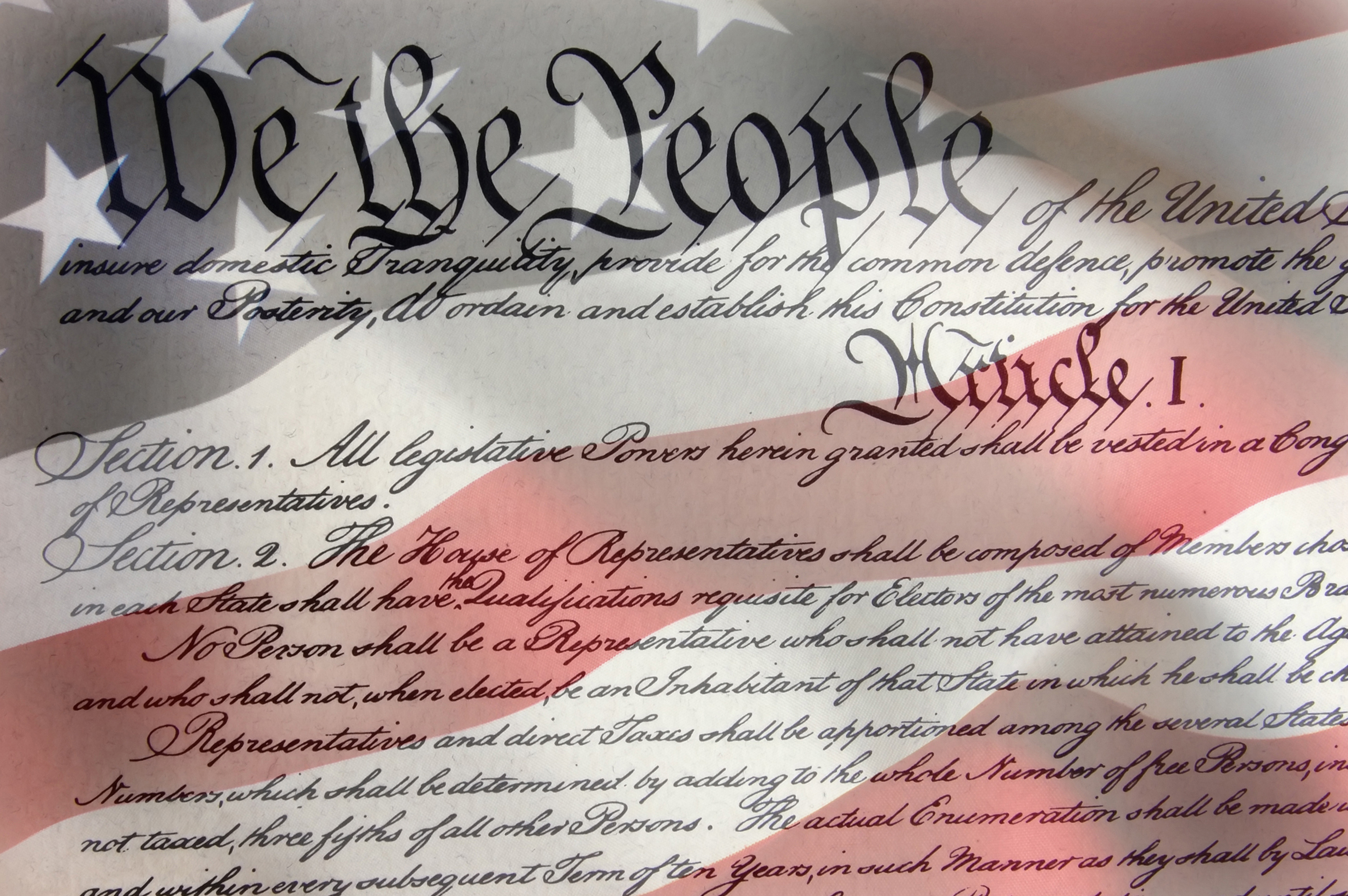
Two common discussions prior to the Revolutionary War were:
- When, if ever, is independence permissible despite scriptural admonitions to obey those in governmental authority? [Romans 13:1] The Founders responded in the Declaration of Independence.
- Are the American people sufficiently virtuous to be self governing? The Founders responded in the Constitution of the United States. “Those people who are not ruled by God will be governed by tyrants.” William Penn
The Founders collective response to the two most important and inescapable questions of the day is why the Declaration of Independence and the Constitution of the United States must be read and understood together as if written as a single document.
The Founders knew that the emerging U. S. Constitution would have to prevent or strongly inhibit the relentless concentration of power that almost universally characterized world history. But they had very little precedent to rely upon. The very few precedents available to the Founders included ancient Israel and early Anglo-Saxon common law. The principle characteristics were nearly identical:
- They were set up as a commonwealth of freemen. A basic tenet was: “Proclaim liberty throughout all the land unto all the inhabitants thereof.” (Leviticus 25:10) This inscription appears on the American Liberty Bell…
- All the people were organized into small manageable units where the representation of each family had a voice and a vote. This organizing process was launched after Jethro, the father-in-law of Moses, saw him trying to govern the people under Ruler’s Law (Exodus 18:13-26)…
- There was specific emphasis on strong, local self-government. Problems were solved to the greatest possible extent on the level where they originated. The record says: “The hard causes they brought unto Moses, but every small matter they judged themselves.” (Exodus 18:26)
- The entire code of justice was based primarily on reparation to the victim rather than fines and punishment by the commonwealth… (Exodus, Chapters 21 and 22). The one crime for which no “satisfaction” could be given was first-degree murder. The penalty was death (Numbers 35:31).
- Leaders were elected and new laws were approved by the common consent of the people. (2 Samuel 2:4; I Chronicles 29:22; for the rejection of a leader; 2 Chronicles 10:16; for the approval of new laws, Exodus 19:8)
- Accused persons were presumed to be innocent until proven guilty. Evidence had to be strong enough to remove any question of doubt as to guilt. Borderline cases were decided in favor of the accused and he was released. It was felt that if he were actually guilty, his punishment could be left to the judgment of God in the future life.13
Rev. Thomas Hooker wrote these principles into the Fundamental Orders of Connecticut, thus expanding upon the concepts of equality and government by the consent of the governed embodied earlier in the Mayflower Compact. That first modern constitution was subsequently adopted by Rhode Island.14 Nearly 150 years later the principles were codified in the Constitution of the United States.
Share this:

Small or Big Government: What Do You Think?

The American public is polarized into essentially two views of government, those who favor small limited government and those who favor big government. Often the polarized view emerges from emotion, a gut sense, or what has been learned or propagandized by the media, politicians, or the educational system, rather than thoughtful investigation and contemplation. The differences are actually quite simple but nevertheless profound and life-changing.
Before comparing small government and big government views, first, consider the Old Testament precedent well known to the American Founders. The Israelites were ruled directly by God for over 400 years from the time of Moses until the time Saul was anointed king by the prophet Samuel. A series of judges resolved disputes among the people. When Samuel grew old, the people demanded a king “…to lead us such as all the other nations have.” [I Samuel 8:5 NIV] During prayer, the “Lord told him (Samuel): ‘Listen to all that the people are saying to you; it is not you they have rejected as their king, but me. As they have done from the day I brought them up out of Egypt until this day, forsaking me and serving other gods, so they are doing to you. Now listen to them; but warn them solemnly and let them know what the king who will reign over them will do.’” [I Samuel 8:7-9 NIV] Samuel told the Israelites:
This is what the king who will reign over you will do: He will take your sons and make them serve with his chariots and horses, and they will run in front of his chariots. Some he will assign to be commanders of thousands and commanders of fifties, and others to plow his ground and reap his harvest, and still others to make weapons of war and equipment for his chariots. He will take your daughters to be perfumers and cooks and bakers. He will take the best of your fields and vineyards and olive groves and give them to his attendants. He will take a tenth of your grain and of your vintage and give it to his officials and attendants. Your menservants and maidservants and the best of your cattle and donkeys he will take for his own use. He will take a tenth of your flocks, and you yourselves will become his slaves. When that day comes, you will cry out for relief from the king you have chosen, and the Lord will not answer you in that day. [I Samuel 8:11-18 NIV]
The people refused to listen to Samuel who again took their demands to the Lord. Then, “The Lord answered, “Listen to them and give them a king.” God had effectively said, “Be careful what you ask for.” What was the result? With the exceptions of several periods of captivity, the Israelites were ruled for the next one thousand years by kings. Following the disobedience of King Solomon, Israel split into two nations, the Kingdom of Israel and the Kingdom of Judah. Readers of the Old Testament commonly and somewhat loosely refer to the “good kings” and the “bad kings” of the period. The good kings, “did what was right in the eyes of the Lord.” The bad kings, “did what was right in their own eyes.” The so-called bad kings dominated the more rebellious Israel. Judah experienced a mix of good kings and bad kings. Clearly, replacing God as the ultimate loving King with a long series of self-serving, self-indulgent men as kings had devastating consequences for the Israelites.
The nature and hearts of people have not changed. From the time of ancient Israel until the present most nations have been headed by kings or king-like dictators. But something changed. In modern times there was a tectonic shift in at least a portion of western civilization. Many groups migrated to the shores of North America seeking to exercise the freedom given by God to worship Him in the manner they chose. They were fleeing king-worship and king subjugation. As the Revolutionary War approached, a common rallying cry, passed up and down the eastern seaboard by the Committees of Correspondence, was, “No King but King Jesus.”1 The colonies and later the United States were blessed by God in extraordinary ways ultimately producing the world’s highest standard-of-living and the best quality-of-life.
Share this:

American Culture in Free Fall

America, specifically the United States of America has been truly blessed in extraordinary ways throughout most of its history on this continent. However, in the last fifty years there has been a readily observable and measurable decline in the American culture.
The importance of lifelong character development has largely been lost. A true understanding of the intimate and inescapable link between the cohesiveness of the traditional family and the cohesiveness and sustainability of the American culture has faded rapidly. Children have become virtually disposable by abortion, neglect, or surrendering them to strangers to grow up with an endless procession of day care centers, government-sponsored programs and schools, and babysitters while mom and dad devote their best and highest priority time to chasing the elusive “successful career.”
The millennia-long multicultural definition of the family is rapidly being diluted to near oblivion. The decline has reached the point that all major institutions (media, education, politics, and entertainment) are dominated and driven by people with an evolution-driven humanistic often godless mindset. The juggernaut of decline is diving toward chaos or totalitarian government control of every aspect of life. Freedom is becoming little more than a legend related by the oldest seniors to their grandchildren and great grandchildren.
To what do YOU attribute the decline of American culture and the family?

 Dr. Lloyd Stebbins